Cart  

No products

Shipping $0.00
Total $0.00

Cart Check out

Translation

  •  Growing & Harvesting Poppies


    Germination

    Poppies germinate best at cool temperatures between 50 and 60 degrees.  They are frost tolerant and may be planted in the spring or fall.  If the seeds are to be germinated anywhere else from where they will be grown we recommend using biodegradable "coir" pots.  Coir pots, which are made from coconut husks are an environmentally friendly alternative to peat based pots.  Poppy plants are easy to grow but do not like to be transplanted. 

    Water the biodegradable pots from the bottom instead of from above.  Place the biodegradable pots in the sink or in a couple of inches of water until moisture appears on top of the soil. 

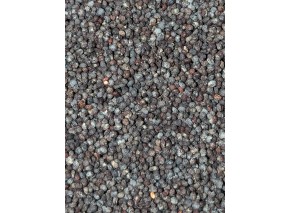
    Press the poppy seeds into the soil but do not cover and do not bury the seeds.  Poppy seeds need some light to germinate.  Keep the soil moist but not wet.  Lightly mist the soil daily with any water spray bottle and cover the pots with plastic to increase the humidity.  As long as the soil temperature is kept around 60 degrees the seeds will usually germinate in 3-20 days. Remove the plastic dome as soon as the seeds germinate.  The biodegradable pots can then be transplanted directly into its desired location without disturbing any of the plants' roots. 

    Indoor Germination

    As we grow closer to the summer months, temperatures are beginning to rise which is why germinating poppy flower seeds can become a little more challenging.  We recommend that you try starting 'some' of your poppy flower seeds indoors within biodegradable pots or trays on a 12/12 photoperiod under a fluorescent light. (Place the fluorescent light 6-12 inches above the tray of seedlings)

    In order to keep the top layer of soil from drying out you may place the biodegradable pots in the sink or in a couple inches of water until moisture appears on top of the soil. You may also use any water spray bottle. Once the seedlings reach 2-4 inches in height indoors, you may then transplant or rather 'place' the biodegradable pots directly into their permanent location. (Without disturbing any of the roots) You may also choose to gradually introduce the young seedlings into the outdoor environment over the course of 1 week. (Slowly increasing the amount of sun exposure they receive each day)

    Please remember the young seedlings (cannot tolerate much of a drought or dry spell due to the lack of a well-established root system and) will most likely require a more frequent watering/feeding cycle under the Sun. As soon as the seedlings have successfully adapted themselves to their outdoor location you may begin thinning them. Select the healthiest and strongest seedlings per pot or every 8-12 inches apart.

    Growing  The vegetative growth or "lettuce stage" of the poppy plant lasts for the first 4-8 weeks.  Poppies grown in a cooler climate is much better than a hot climate.  A neutral ph balance of 7 is most effective for growing poppies.  A drop in temperature of about 20 degrees or more at night is ideal.  The night time drop in temperature is most important during the first eight weeks of the poppy plants life. 

    Poppy plants will bloom from the month of march to august and they prefer sunny spots (with at least six hours of direct sunlight a day) with rich well-draining soil.  If you plan to grow in containers please be sure to use a pottting mix and not garden soil.  Garden soil can become heavy and sluggish when wet.  Choose containers with drainage holes so that the soil will not become waterlogged. 

    As the plant establishes its root system, the growing ideal temperatures remain the same as the germination temperatures.  Supply the plants with 8 to 14 hours of sunlight per day (12 hours per day is ideal).  During the first two weeks some of the young seedlings may flop over and appear to be dying.  This is a common and normal growth response seen in many different species of poppies.  You may if you like offer support or stake the young seedlings to help keep them growing straight for the first weeks. 

    For the individuals who are gardening indoors or in a greenhouse you may use an oscillating fan to help strengthen the seedlings.  Be sure to place the oscillating fan on a low setting and at least a few feet away from the young seedlings.  In addition, enriching the gardening area with CO2 (carbon dioxide) can help strengthen the poppies, accelerate the growth rate as well as encourage them to produce a higher number of flowering pods. (Note: CO2 should only be released during the light cycle) 

    Begin thinning the seedlings when they are 2 to 4 inches tall.  Select the healthiest and strongest seedlings and cut down the surrounding seedlings to allow 8 to 12 inches between each plant or one seedling per container. (Note: pulling or uprooting the seedlings may disturb and harm the neighboring plant and its roots)  If the plants are crowded there will be a decreased number and size of flower heads harvested. 

    A general purpose nutrient feeding will work fine for poppy plants.  However, poppies can thrive on water alone.  Providing adequate space for the plants will increase air circulation as well as help prevent any attacks from pests such as aphids.  Poppies are rarely troubled by pests.  If necessary, simply wash the pests off with a light to medium pressure spray or you may eliminate pests just by hand.  In extreme circumstances apply an insecticidal soap to the branches and to both the upper and undersides of the leaves. 


    Flowering

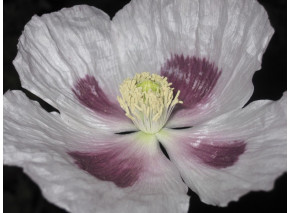
    As the poppy plant matures and enters the flowering period they will require longer days of 15 to 18 hours.  Indoors, poppies may be introduced to the flowering stage once they have spent approximately 6 weeks in the vegetative stage.  During the flowering stage, day time temperatures of 68-75 degrees and cool nights of 35-55 degrees are best.  Most poppies will flower between 55 and 60 days.  Blooms last for two days up to two full weeks.  Deadhead spent blooms to promote more flowers.  For creating colorful and stunning flower arrangements, it is best to cut compact buds in the early morning and sear the cut end of the stem with a match or a flame before placing it in cold water.


    Harvesting Poppy Pods

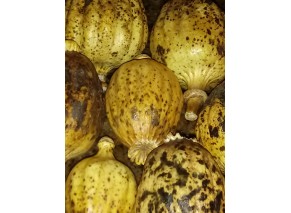
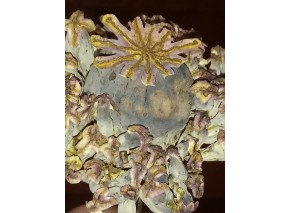
    Once the poppy flowers have fallen off, the flowering pods will swell and become a blue-grayish color.  The poppy pods will be mature and ready to harvest 10-14 days after the poppy flowers or petals have fallen.  It is important that you begin to curtail your watering efforts during these last two weeks.  Watering as usual at this stage of the plants life cycle will dilute the alkaloids potency.  Individuals living in warmer climates should continue to mist or lightly water the poppy plants in order to keep the soil from becoming hard and dry.  Please remember, poppy plants do require some moisture to produce their alkaloids.

    There are two primary styles that are used to harvest the poppy pods.  A simple razor blade can be used to make horizontal cuts around the entire flowering pod.  Others prefer to make vertical incisions in an upward fashion.  Be sure to make the incisions no deeper than a millimeter or two.  If the incisions are made too deep, the latex will spill into the seeds (inside the pod).  As soon as two or theree vertical or horizontal cuts are made into the poppy flower pod, raw opium will spill out and run down the pod.  Allow the latex to dry and harden on the pod for up to 12 hours as this process will turn it brown and black.  The sap may be collected from the pod once it has become a light to dark brown color.

                         If you have any questions please click on our Contact Us link below 

    To reach us by phone please call 512-637-1020, Monday - Friday, 8:30am-5:00pm

    Phone International : 001-512-637-1020

     Information regarding Harvesting Poppy Pods is for educational purposes only


    © 2010 PoppyseedDreams.com. All Rights Reserved. All website photos are U.S. Copyright